Heating a Backyard in November: Four Options, Priced Per Hour
I priced propane, electric infrared, a fire pit and a $38 windbreak by the hour. The exchange-cylinder tax, the wind problem, and what I actually buy.
Prices researched in October 2026 from US retailers and national averages. Nothing here is sponsored. Full disclaimer
On this page8 sections
The first November party I tried to heat, I rented a tall propane mushroom heater, set it in the middle of the patio, and lit it an hour early. By eight o'clock there were fourteen people in my backyard and eleven of them were standing around the grill, which was off. The heater ran all night with nobody near it.
I spent a while assuming that was a placement problem. It wasn't. Those eleven people had found the two things that actually make a cold yard tolerable, and neither one was the heater: they were out of the wind, and they were getting radiant heat off warm metal. The heater was making a beautiful column of hot air that went straight up and left.
So here is the priced version of what I learned, because outdoor heating is the one hosting category where the sticker price and the running cost are wildly different numbers and almost nobody publishes the second one.
BTUs are the wrong first question
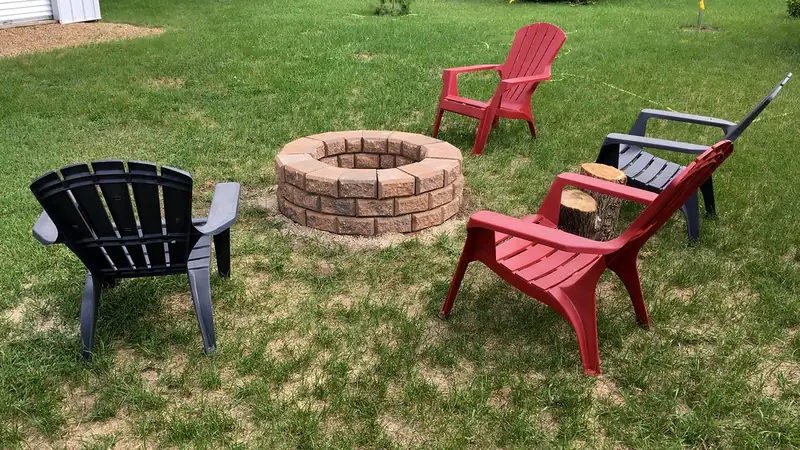
Two kinds of heat show up in a backyard. Convective heat warms air, and moving air takes it away — a propane mushroom heater is mostly a convective appliance, and a 10-mile-an-hour breeze is a very effective way to heat your neighbor's yard. Radiant heat travels as infrared, warms whatever surface it lands on, and does not care about wind at all. That's the grill. That's a fire pit. That's an electric infrared bar.
This distinction is why a 48,000-BTU heater can leave people cold while a coal bed a tenth as powerful has a crowd around it. Wind doesn't reduce radiant output. It reduces convective delivery to roughly nothing.
Which leads to the cheapest purchase in this article: a windbreak beats a second heater, every time. Two moving blankets clipped to a fence on the windward side, about $38, do more for a twelve-person patio than $270 of additional appliance. I have tested this more or less by accident, several times, and it has never once come out the other way.
What the four options cost to own
Prices below are Home Depot listings I checked in September 2026. Patio heater pricing is unusually volatile — it moves with the season and with markdowns — so treat these as a snapshot with real spread, not a fixed number.
| Option | What it is | Output | Price checked Sept 2026 |
|---|---|---|---|
| Propane mushroom heater | Standing 7-ft LP heater on a 20-lb cylinder | 48,000 BTU/hr | $129.00 to $271.78 |
| Electric infrared | Freestanding or mounted radiant bar | 1,500 W = 5,118 BTU/hr | $137.61 to $286.56 |
| Wood fire pit | Open steel or stone bowl | Varies wildly | $60 to $400+ |
| Windbreak and blankets | Moving blankets, clips, wool throws | None | About $110 |
Source: Party Wealth price research.
What the fuel costs
Now the part I could not find published anywhere in comparable units, so I derived it.
A gallon of propane holds about 91,420 BTU by the Department of Energy's fuel properties table; Ferrellgas uses 91,502 and puts a full 20-pound cylinder at roughly 430,000 BTU, which works out to about 21,500 BTU per pound of propane. Electricity is simpler: one kilowatt-hour is 3,412 BTU, and the BLS US city average price in July 2026 was 19.7 cents. EIA's last residential propane reading of the 2025–26 heating season, the week ending March 30, 2026, was $2.674 a gallon.
| Fuel | Price | Energy | Cost per 100,000 BTU |
|---|---|---|---|
| Propane, refilled into your own tank | $2.674/gal | 91,420 BTU/gal | $2.93 |
| Electricity | $0.197/kWh | 3,412 BTU/kWh | $5.77 |
| Propane, exchange cylinder | ~$22.50 each | 322,500 BTU each | $6.98 |
Source: Party Wealth price research.
The exchange-cylinder tax
That bottom bar deserves its own heading, because it is the single most expensive habit in backyard hosting and almost nobody knows they have it.
A "20-pound" propane cylinder from a swap cage does not contain twenty pounds of propane. Blue Rhino says so plainly: their grill tanks contain a net weight of 15 lbs. of propane. You hand over an empty tank rated for twenty and receive one filled to fifteen — a quarter less fuel — for $20 to $25.
Two consequences follow, and both matter on a cold night:
- Your fuel costs about 2.4 times what a refill costs. $22.50 for 322,500 BTU is $6.98 per 100,000; the same energy pumped into your own tank at EIA's last residential price is $2.93.
- Your heater's advertised runtime is fiction. A 48,000-BTU mushroom heater runs about 9 hours on a genuinely full 20-pound tank. On an exchange cylinder it runs 6.7 hours — and a cold cylinder in a November yard delivers gas more slowly as it draws down, so the last hour is not the same hour as the first. Plan a four-hour party on a cylinder that is already half-used and you will be swapping tanks in the dark, which is exactly the category of avoidable mid-party failure I keep a running list of.
Cost per four-hour party
| Setup | Fuel used, 4 hrs | Cost for the evening |
|---|---|---|
| Electric infrared, 1,500 W | 6 kWh | $1.18 |
| Propane mushroom, refilled 20-lb tank | 2.1 gal | $5.61 |
| Propane mushroom, exchange cylinder | 0.6 of a cylinder | $13.39 |
| Wood fire pit, store bundles | 2 to 4 bundles | $10 to $40 |
| Wool throws and a windbreak | none | $0 |
Source: Party Wealth price research.
The layout that actually works
Heat placement is a geometry problem and the order of operations is not obvious.
Build it in this order. One: block the wind on the windward side, at body height, before you think about heat. Two: put the heat where people already want to stand — near the door, near the drinks, near the food — rather than in the geometric center of the patio, which is where nobody stands. Three: put the drinks table downwind of the heat so the traffic pattern pulls people into the sheltered pocket instead of out of it. This is the same principle as placing a single speaker so one zone carries the party: you're not trying to cover the yard, you're trying to make one part of it excellent.
The safety rules that are not optional
NFPA's outdoor heater guidance, drawn from NFPA 1, Fire Code, is short and every line of it is the kind of thing you find out the hard way. From their outdoor heater fact sheet and their heating safety guidance:
- Three feet of clearance between heating equipment and anything that can burn. That includes the string lights, the tablecloth, and the pop-up canopy leg.
- Heaters cannot be used in enclosed locations. A zipped-up gazebo or a tent with the sides down is an enclosed location. This is the rule people break when it gets genuinely cold, and it is the one that produces carbon monoxide in a space full of guests.
- Turn portable heaters off when the area isn't occupied. My mushroom heater burning to an empty patio was a code violation as well as a waste.
- Propane cylinders must never be stored inside a building, and not on a roof. Stored outdoors they belong at least 5 feet from a doorway or opening — 10 feet where the building has only one way out. The spare tank does not live in the garage. Mine sits on the side of the house behind a fence panel.
- Hoses short, visible, and protected. Outdoors, use an outdoor-rated extension cord for electric heaters and run it where nobody walks.
What I actually buy
- Wool-blend throws x6 at about $12$72.00
- Moving blankets x2 plus clips, as a fence windbreak$38.00
- 1,500-watt infrared heater (checked range $137.61 to $286.56)$137.61
- Outdoor-rated 12-gauge extension cord, 25 ft$24.00
- Durables, bought once$271.61
- Two bundles of firewood$14.00
- Electricity, heater running 4 hours$1.18
- Cider, cocoa, and the marshmallows$18.40
- Per night after that$33.58
- First night, all in$305.19
Heater price and electricity are verified — Home Depot listings checked September 2026 and the BLS US city average of 19.7 cents a kilowatt-hour for July 2026. Blankets, cord, wood and drinks are my store in October 2026 and will move 15 to 20 percent by region. Every night after the first costs $33.58, and $14 of that is wood you could skip. Three parties in, the kit is under $125 a night; by the second winter it is under $35.
The blankets are the line people skip and the line that gets used. Six throws in a basket by the door cost less than one more heater, they work instantly, they work at the edge of the patio where no heater reaches, and a guest holding a blanket has decided to stay outside — which is the whole objective. This is a buy, not a rent: rental mushroom heaters run real money per night, they arrive with an exchange cylinder, and they solve the wrong half of the problem.
Two winters ago I hosted a fifty-degree, breezy November evening for eleven people with one infrared bar, a blanket basket, a fire pit burning two bundles, and $38 of moving blankets zip-tied to the fence. Nobody went inside until nine. The whole night's heat cost about fifteen dollars, and the thing everyone commented on was the blankets — which, as with most of what a backyard party is judged on, was the cheapest thing out there.
Marisol Vega
Marisol is a serial host from Texas who has thrown everything from an 8-person dinner party to a 120-guest backyard quinceañera, and budgets every event in a spreadsheet before she buys a single bag of ice. She publishes the spreadsheets here so your money lands where guests will actually notice it.
No certifications, no celebrity clients, no event-planning firm — the authority here is itemized receipts, per-guest quantities, and timelines that survived contact with real parties.