"How Much Food Per Guest? The Quantity Cheat Sheet I Use for Every Party"
The per-guest quantity tables I actually use — appetizers, mains, sides, dessert, drinks, and ice — plus the adjustments that keep you from over-buying by 40%.
Prices researched in August 2026 from US retailers and national averages. Nothing here is sponsored. Full disclaimer
On this page8 sections
Over-buying is the most expensive mistake in hosting, and it doesn't feel like a mistake while you're making it. It feels like generosity. Then Tuesday arrives, you're eating your fourth consecutive meal of party meatballs, and the compost bin gets the veggie tray you bought "just in case." I've tracked the leftovers from my own parties in a spreadsheet for years — yes, really — and my consistent finding is that an unplanned party over-buys food by 30–40%, almost all of it in the same three categories: appetizers, sides, and dessert.
These are the tables I check before every single event. Screenshot them. The numbers assume American adults at a party (not a seated formal dinner, not teenagers — adjustments for both below).
The master table: food per guest
| Category | Per adult guest | Notes |
|---|---|---|
| Appetizers (before a full meal) | 3–5 bites | Total, across all apps. Not per app. |
| Appetizers (cocktail party, no meal) | 10–12 bites | Spread over 2–3 hours |
| Main protein (boneless) | 1/3 lb cooked | Roughly 1/2 lb raw |
| Main protein (bone-in, e.g. wings, ribs, thighs) | 3/4–1 lb raw | Bones are heavy |
| Pasta or rice as the main | 4 oz dry | 2 oz dry as a side |
| Sides | 2 sides × 1/2 cup each | More sides ≠ more total; guests self-ration |
| Salad | 1 handful (about 1 oz greens) | A 1 lb clamshell serves 12–16 |
| Bread | 1.5 rolls or 2 slices | Goes fast when it's warm, slow when it's not |
| Dessert | 1 slice or 2 small pieces | The most over-bought category on this list |
Source: Party Wealth price research.
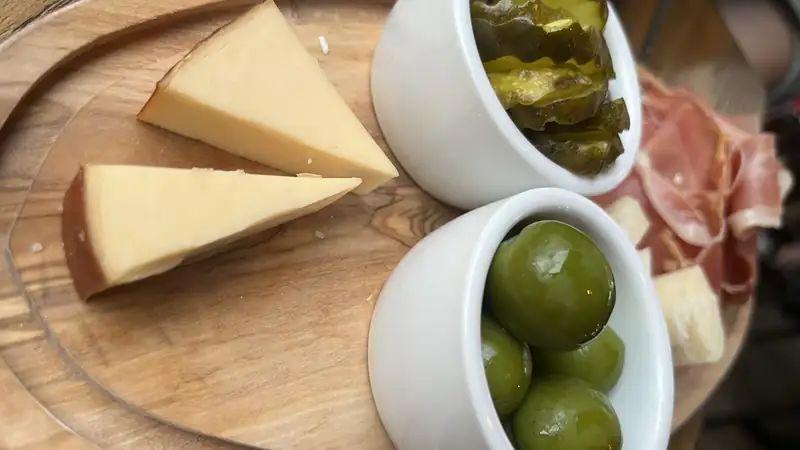
The single most useful rule hiding in that table: appetizer counts are totals, not per-recipe. If dinner is coming, four bites per person means one board or two passed items — not the six-dip spread that Pinterest suggests. When I costed out a full dinner party for eight at $150, one generous cheese board was the entire appetizer budget, and nobody starved.
Drinks per guest
| Drink situation | Per adult, first hour | Each additional hour |
|---|---|---|
| Beer/wine only | 2 drinks | 1 drink |
| Full cocktails | 2 drinks | 1 drink |
| Non-drinkers & drivers | 2 n/a drinks | 1 per hour — stock real options |
| Water/seltzer | 1 bottle or 2 glasses | Double it outdoors in summer |
| Coffee (dessert hour) | 1 cup per 2 guests | Half decaf, trust me |
Source: Party Wealth price research.
Wine math shortcut: a 750 ml bottle pours five glasses, so one bottle per two guests covers a long dinner with a buffer. A drinks-focused party is its own budget problem — the signature-cocktail-versus-open-bar math is where the real money moves, since one decision there swings your total more than every appetizer combined. For what counts as "a drink" when you're estimating, the NIAAA standard drink definition is the reference I use: 12 oz of beer, 5 oz of wine, or 1.5 oz of spirits are all the same drink.
Ice: the one everybody gets wrong
Ice is the cheapest thing you'll buy and the thing hosts most reliably run out of at 8:40 p.m.
- Drinks in glasses: 1 lb of ice per guest.
- Chilling cans/bottles in a cooler: 1 lb per guest on top of the drinking ice. Cooler ice and glass ice cannot be the same ice; the cooler ice has been touching can bottoms all night.
- Outdoors above 85°F: double everything. In a Texas July, I buy 2.5 lb per guest and have never thrown away more than one bag.
A 10 lb bag runs $2–4 at most US grocery and convenience stores. Buying two extra bags costs less than one forgotten guest's seltzer. There is no scenario where extra ice embarrasses you.
The adjustments that actually matter
Numbers above are the baseline. Real parties need multipliers:
- Standing party: −20% food. People eat less without a table and a fork. This is why cocktail parties are secretly cheap.
- Teenagers and college students: +50% on mains and anything fried. No further questions.
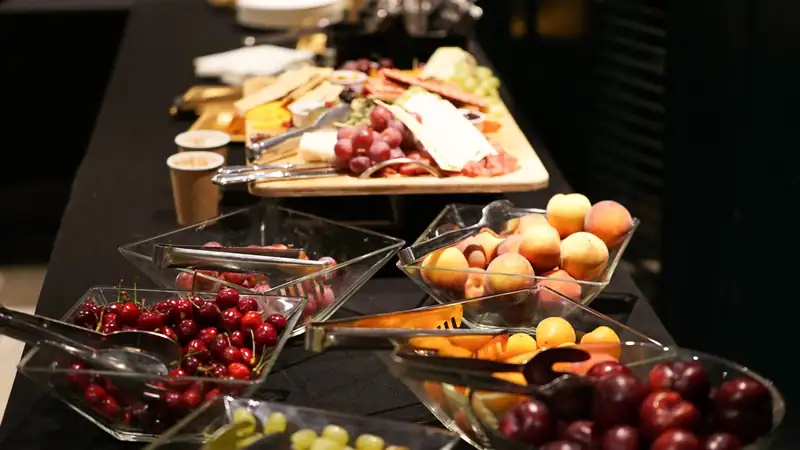
- Buffet: +10% on the first two items in line. Whatever sits at the head of a buffet gets hammered; put the cheap starch first and the expensive protein last. This is the oldest catering trick there is, and it works at a backyard birthday exactly like it works at a wedding.
- Kids under 10: count two kids as one adult for food, then add one dedicated kid-food item so they actually eat something.
- Daytime events (11 a.m.–3 p.m.): −15%. Lunch appetites are smaller than dinner appetites, every time.
- The "polite ceiling": at potluck-style events people under-eat the last portion of everything. Eight guests will finish 7 portions of a dish, not 8. Round accordingly and read how I exploit this in the Friendsgiving assignments method.
A worked example: 20 people, casual buffet
Say you're feeding 20 adults dinner, buffet-style, 6–9 p.m. Straight from the tables:
- Pulled chicken (bone-in thighs, 15 lb raw)20 × 3/4 lb
- Buns (1.5 each, in packs of 8)4 packs
- Two sides (mac + slaw), 1/2 cup each10 cups per side
- Salad (20 handfuls)2 lb greens
- Appetizer: chips + one dip, 4 bites each3 bags, 1 quart
- Sheet cake, 1 slice eachquarter sheet, serves 24
- Drinks hour one (2 × 20) + hours two/three (40)80 servings
- Ice (indoor, glasses + cooler)40 lb
- Rule checkNothing doubled "to be safe"
"Servings" of drinks = cans + wine glasses + n/a options combined, not 80 beers.
Notice what's not on that list: a third side, a second dessert, a backup app. Every one of those is a $25–40 line item that the leftovers spreadsheet says nobody needed. If you want to see this logic executed with real store prices, my Costco run that feeds 25 people for under $200 is this exact table with a receipt attached.
Dessert and coffee: the endgame quantities
Dessert planning has its own failure mode: hosts buy dessert variety when guests want dessert presence. One slice or two small pieces per person, from one dessert, finishes a party cleanly. The numbers that matter: a 9-inch cake or pie yields 8–10 party slices; a quarter sheet cake serves about 24; a half sheet serves 48 (Costco's $27.99 half-sheet is the reigning per-slice champion of American dessert at 58 cents). Cookies and bars count as "two small pieces," so a batch of 24 covers a dozen guests exactly.
Coffee at dessert hour is the most over-provisioned beverage in hosting. Half your guests will decline entirely after 7 p.m., and half of the acceptors want decaf — hence the one-cup-per-two-guests line in the table, split half regular, half decaf. A standard 12-cup drip pot brews ten actual mugs; for parties under 20, one pot of each, brewed once, is the ceiling. The $40 "coffee bar" with three syrups is decor wearing a beverage costume.
The same endgame logic applies to late-night food at long parties: if the event runs past four hours, people get hungry again at roughly the four-and-a-half-hour mark. A $7 frozen pizza or a bag of pretzels deployed at 10:30 p.m. earns more gratitude per dollar than any appetizer on this page. Budget it or watch someone order delivery from your couch.
Food safety changes the math too
FAQ
What if I'm still nervous it won't be enough? Add starch, not protein. An extra $4 bag of rolls or $6 of pasta salad is insurance; an extra $30 of meat is a donation to your freezer.
What's the one number to remember if you remember nothing? One pound per person, total, across all food at a casual party. It's crude, but it has kept every host I've given it to out of both ditches.
Marisol Vega
Marisol is a serial host from Texas who has thrown everything from an 8-person dinner party to a 120-guest backyard quinceañera, and budgets every event in a spreadsheet before she buys a single bag of ice. She publishes the spreadsheets here so your money lands where guests will actually notice it.
No certifications, no celebrity clients, no event-planning firm — the authority here is itemized receipts, per-guest quantities, and timelines that survived contact with real parties.